The Quiet Killer: How FX Exposure Bankrupts Import-Led Businesses in Africa

Uchechukwu
Founder, GSV
.
8 min read
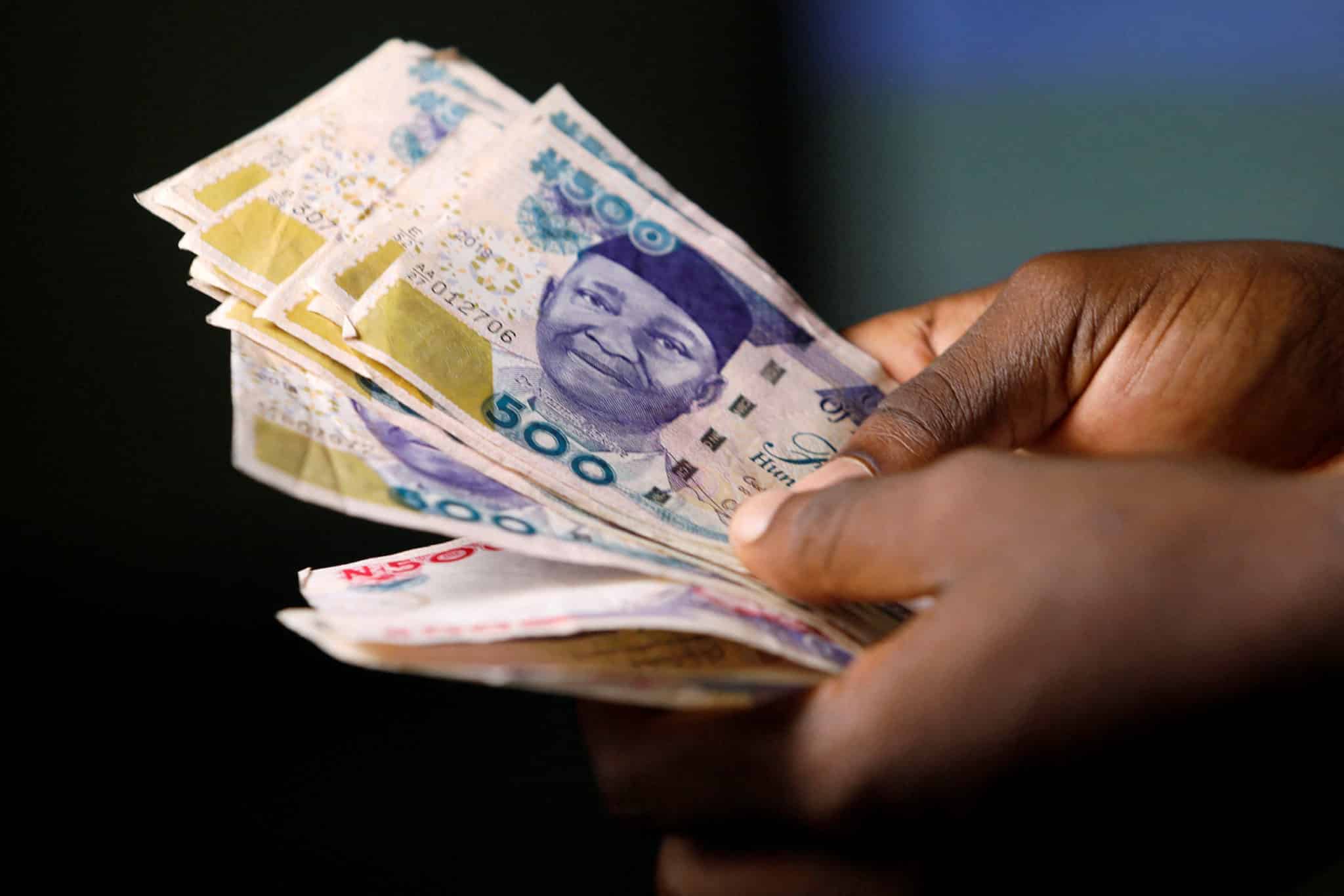
The Quiet Killer
Margin is strategy — and in Africa, the fastest way to lose it is a currency you don’t control. A perspective on building businesses that survive a devaluation.
Picture a business that does everything right. Good product, real demand, healthy sales. On paper it runs a 40% margin. The founder is expanding, hiring, ordering more stock. Then, over a few months, the currency moves — and the business is suddenly underwater. Nothing about the product changed. Demand didn’t fall. The margin was simply never as real as it looked. It was borrowed from an exchange rate that didn’t hold.
This is the quiet killer of import-led businesses. Not competition. Not a weak idea. Foreign exchange exposure — and the false confidence of a margin that only exists while the currency stays still.
What actually happened to the Naira
The numbers are worth sitting with, because they are not abstract.
In June 2023, Nigeria floated the naira. Within a week the official rate moved from roughly ₦465 to ₦708 to the dollar. It kept going. Over 2024 the currency depreciated by around 129%, closing the year near ₦1,479 to the dollar and touching lows beyond ₦1,650. Inflation ran above 35%, with food inflation near 40%. As Businessday summed it up, the float “fixed” some things and “broke” others — and what it broke, it broke fast.
Put plainly: a business that imported at ₦460 to the dollar in early 2023 was restocking at more than three times that cost within eighteen months. Every container bought in dollars but sold in naira became a slow-motion loss, and most owners only saw it when it was time to reorder.
The trap, and how it springs
The mechanics are deceptively simple, which is exactly why they catch good operators.
You import stock at today’s rate. You price it for a margin that looks healthy. You sell through. But the money you get back is in naira — and by the time you convert it to buy the next container, the dollar costs more. Your selling price bought less inventory than the batch before it. The margin you celebrated last quarter quietly funded the currency’s move, not your growth.
Do that a few cycles in a devaluing environment and the business consumes its own capital. Revenue looks fine. The bank balance shrinks anyway. The founder blames operations, or the market, or bad luck — when the real leak was a cost base priced in a currency they didn’t earn.
And this isn’t a small-business problem. The companies with entire treasury departments took the same hit. Across a handful of Nigeria’s largest listed firms, foreign exchange losses ran to roughly ₦2.02 trillion in the first half of 2024 alone; a single household-name manufacturer absorbed an FX loss of around ₦285 billion over nine months, swinging a profitable business to a heavy loss. If firms with hedging desks and dollar-pricing power bled that heavily, the importer running on instinct and a WhatsApp supplier has no cover at all.
A pattern the whole continent knows
Nigeria’s story is dramatic, but it is not unique. Import-led economies across Africa have run this exact script — and the FMCG and consumer-goods sector wears it first, because so much of what fills a shelf begins as a dollar invoice.
Ghana, 2022. The cedi lost more than 55% against the dollar in a single year — among the worst-performing currencies in the world. Inflation on imported goods hit 43.7%, even higher than for locally produced items. Importers reported being unable to raise enough to finance shipments, and the central bank rationed access to foreign exchange. Sound familiar?
Egypt, 2016 onward. A textbook case study in import dependence. When Egypt floated the pound in 2016 it lost over half its value almost overnight, from around 8.8 to 18 per dollar. A chronic dollar shortage made financing imports so hard that a currency black market flourished, and importers were forced to price goods off the parallel rate. Because Egypt’s economy leans heavily on imports, every devaluation landed directly on the consumer shelf.
The pattern repeats because the underlying exposure is identical: a business that earns in a soft local currency but pays for its goods in hard currency. The country changes; the trap does not. Wherever import dependence meets a weak currency, margin is the first casualty — and the businesses that survive are the ones that saw it coming.
Why margin is the only real defence
Here is the uncomfortable truth: you cannot out-hustle a currency. You cannot sell your way out of FX exposure if your margin is thin, because volume just accelerates the leak.
The only structural defence is margin — a spread wide enough to absorb a move before it reaches your capital. This is what people miss when they treat margin as a scoreboard number. Margin is not vanity. It is a shock absorber. A business running 20% has almost nothing between it and the next devaluation. A business built to hold a genuinely high margin can take a currency hit, reprice, and survive to trade another cycle.
That is why margin is strategy, not an outcome — the theme running through everything we build. You do not “achieve” margin at the end of a good year. You design it in at the start, precisely so the business can withstand the shocks you know are coming in a market like this one.
Building FX resilience: the practical version
Understanding the trap is half of it. Here is how disciplined operators actually build against it — the lens we apply before backing any import-touching business.
Price for replacement cost, not purchase cost. Your price should reflect what it will cost to restock, not what you paid last time. If the currency is drifting, yesterday’s cost is fiction. Pricing to replacement keeps your capital whole between cycles.
Build the buffer before you need it. A high margin isn’t greed; it’s insurance. The wider your spread, the larger a devaluation you can absorb without eating into working capital. Thin margins in a volatile currency are a countdown, not a business model.
Localise what you can. Every input you can source, substitute, or produce locally is one less line exposed to the dollar. Across the continent — including Nigeria’s own $25bn FMCG market — the smartest consumer businesses are quietly pivoting toward local sourcing for exactly this reason. It shrinks the surface area the currency can attack.
Turn inventory faster. FX risk lives in the gap between when you pay for stock and when you convert sales back into new stock. The shorter that cycle, the less time the currency has to move against you. Velocity is a hedge.
Match your currencies, and fear FX-denominated debt. Borrowing in dollars to run a naira business is how strong companies became loss-making ones. Where you can, match the currency of your costs to the currency of your revenue — and treat foreign-currency debt as a risk to avoid, not a clever financing trick.
Stage your capital. Don’t lock your cash in a warehouse full of slow-moving imported stock. Capital frozen in inventory can’t respond when the rate moves. Deploy in tranches; keep optionality.
The wider lesson
This is really a story about hidden exposure — and every business has some. For importers it’s the dollar. For others it’s a single supplier, a single customer, a single regulation, a landlord, a platform. The discipline is the same: find the thing you don’t control, and build a buffer against it before it forces your hand.
That’s the difference between a business that looks profitable and one that is durable. The first is priced for calm weather. The second is built to trade through the storm — because across much of Africa, the storm is not a possibility. It’s the climate.
Margin is how you stay standing in it.
We build to last. We build to lead. We build Africa forward.
Further reading & sources
• Intelpoint — Nigeria’s naira depreciated by 129% in 2024
• Businessday — The naira float: what it fixed, what it broke
• ThisDay — MTN, Nestlé and others recorded ₦2.02tn FX losses in H1 2024
• FIJ — How Cadbury and Nestlé Nigeria lost ₦300bn in nine months
• U.S. ITA — Ghana currency depreciation · Egypt’s foreign currency crisis
• Businessday — Nigeria’s $25bn FMCG market pivots to local sourcing